

31/08/2028
An export processing enterprise (EPE) in the electronics industry can complete customs clearance procedures for 100% of its import-export declarations smoothly throughout the year and still face the risk of tax reassessment and administrative penalties during the Post-Clearance Audit (PCA). The root cause typically stems from data inconsistencies among three internal management systems: Financial Accounting, Warehouse/Production Management (WMS/ERP), and Customs Declaration. For the EPE model — where imported raw materials are exempt from import duties on the condition that they must be justified and balanced accurately down to each unit of goods — the most critical compliance risk lies not in the clearance stage at the border, but in the consistency of the internal bookkeeping data system.
How Do Electronics Export Processing Enterprises Prepare the Final Settlement Report?

The legal nature of the export processing enterprise mechanism is the management of conditionally duty-free goods: imported raw materials serving export production are exempt from import duties, and in exchange, businesses are obliged to prove that the entire volume of those raw materials has been incorporated into exported products, legally converted for another purpose, or is being held in actual inventory. Data on Imports – Exports – Inventory in the Final Settlement Report (Form No. 15/BCQT-NVL/GSQL), along with finished goods data and actual consumption norms on related forms, must be capable of being cross-checked and reconciled with actual operations and accounting books. Among these, the electronics industry creates reconciliation barriers more complex than most other manufacturing industries due to three technical particularities:
First, the depth and complexity of technical norms (Multi-level BOM). An electronic printed circuit board integrates from hundreds to thousands of small-coded components (SMD, IC, capacitors, resistors) that are dispersed in size but very large in cumulative value. Balancing such a catalog cannot be done through simple aggregate calculations; it requires the reconciliation process of millions of transaction logs arising throughout the fiscal year between internal management codes (Part Numbers) and HS codes declared to customs.
Second, actual loss rates and production variance ranges. Components fail during Surface Mount Technology (SMT), printed circuit boards are rejected during Functional Testing (FCT/ICT), and the yield rate of products meeting standards fluctuates by batch; therefore, the actual consumption norm (Actual BOM) typically has a certain deviation from the design technical norm (Engineering BOM).
Third, the pace of technical change and supply chain evolution. The continuous issuance of Engineering Change Notices/Orders (ECN/ECO) and the substitution of equivalent component suppliers between periods causes the norm structure of the previous quarter to develop discrepancies against the actual production data of the following quarter if not synchronized in real time.

Taken together, the final settlement report of an electronics EPE is not merely an administrative procedure for filing forms, but a large-scale multi-dimensional data reconciliation process, where a small deviation on each unit of component, when multiplied by industrial output scale, transforms into significant tax reassessment risk.
Management Solutions for the Three Systems
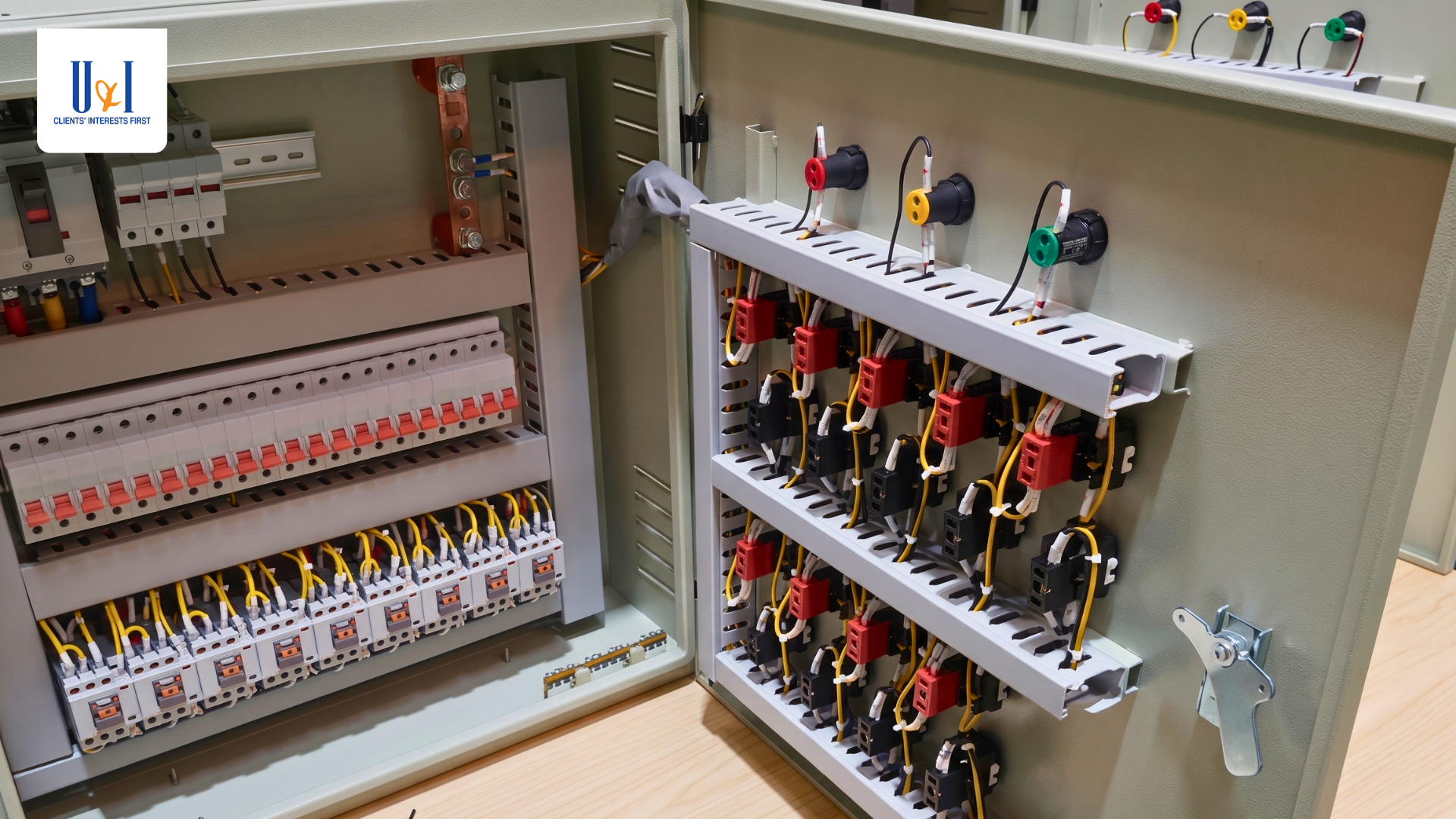
To accurately identify the compliance bottleneck, it is necessary to analyze the shift in the Customs authority's management approach: shifting the focus from pre-clearance inspection to post-clearance inspection based on the principle of risk management. Goods are released and cleared faster at the border, but the obligation to prove the legitimacy of the goods flow and the amount of duty exempted shifts entirely to the business. During the post-clearance inspection, the Customs authority will cross-check the Final Settlement Report against the accounting books (Accounts 152, 154, 155), actual inventory data, and consumption norm records. Under the provisions of Article 60 of Circular 38/2015/TT-BTC (as amended and supplemented in Circular 39/2018/TT-BTC and updated by Circular 121/2025/TT-BTC), the Final Settlement Report on the use of imported raw materials and supplies must be submitted no later than 90 days from the end of the fiscal year.
The core challenge lies in the fact that the data for preparing the report originates from three independent systems with different operating objectives: the Warehouse Management System (WMS) tracks cargo movements; the ERP System manages the structure of technical norms and production orders; while the VNACCS System records customs declaration data. Inconsistency in internal management codes (with declaration management codes), or unsynchronized recording of actual loss rates, will create deviations in Imports – Exports – Inventory data. This discrepancy runs the risk of being identified by the inspection team as duty-exempt raw materials whose purpose cannot be justified, directly leading to decisions to reassess import duties, VAT, and impose administrative penalties. Typical risks often arise when businesses record theoretical technical norms lower than actual consumption levels (for example: an actual product requires 1.2 kg of raw material but only 1.0 kg is recorded); the surplus raw materials outside the books will immediately be exposed when inventory is reconciled.

Therefore, the optimal solution for export processing enterprises does not stop at pure customs declaration service, but requires a Professional Customs Brokerage model integrated with the capability to prepare final settlement and norm consumption reports. This operating framework needs to establish a monthly or quarterly data reconciliation mechanism to address discrepancies within the accounting period itself; standardize norms based on actual consumption figures accompanied by valid technical documentation and change orders; and finalize a highly reliable Imports – Exports – Inventory documentation set. With this capability, a provider such as U&I Logistics — delivering customs brokerage services alongside final settlement report preparation solutions — will support businesses in reconciling data, detecting discrepancies, and standardizing the documentation set before authorities conduct post-clearance inspections.
Three Prerequisite Conditions

Not every export processing enterprise can immediately implement this management solution if it has not yet met the three core operating conditions.
The first condition is to implement a continuous data reconciliation mechanism on a monthly or quarterly basis, rather than pushing all data to the 90-day deadline after the end of the fiscal year; separating discrepancies over shorter cycles allows for tracing causes and making timely corrections, avoiding the accumulation of errors into gaps that cannot be justified.
The second condition is to build a consumption norm system that truthfully reflects the actual loss and defect rates on the production line, rather than trying to make the documentation look better with theoretical figures; lowering the norm on the books directly creates a risk trap when the Customs authority cross-checks against the physical inventory balance during the post-clearance inspection.
The third condition is to establish a tight data coordination mechanism among three departments: Warehousing, Production, and Import-Export/Accounting; because bottlenecks and data discrepancies typically arise at the handover links between departments, not localized in a single stage.

That is why in-depth sector-specific logistics services (Sector-Specific Logistics) — a model with deep understanding of technical data structures and specialized customs settlement operations — are shifting from a service role to the position of a strategic symbiotic partner. For electronics export processing enterprises, a partner with the capability to standardize and ensure a single stream of data flowing consistently through all three systems not only supports businesses in passing the annual Final Settlement Report deadline, but also directly preserves the legitimacy of their tax-preference status during post-clearance inspections.



31/08/2028
31 lines of dual-use goods across 4 groups (electrical, chemical, metals/alloys, UAV) require enterprises to classify simultaneously by HS code, description, and technical threshold — HS codes alone cannot determine whether goods fall under control.

31/08/2028
Decree 292/2026/ND-CP, effective from September 5, 2026, replaces Decree 69/2018/ND-CP, updating the prohibited goods list according to AHTN 2022 with 23 groups prohibited from import and 10 groups prohibited from export, tightening HS code compliance and adding provisions prohibiting goods produced through forced labor.

31/08/2028
The 2026–2030 period is a pivotal time for Vietnam to transition from processing to a complete semiconductor ecosystem, but logistics costs of 16.8–17% of GDP and an LPI ranking of 43/139 are the barriers forcing logistics enterprises to shift their role from standalone logistics to comprehensive integration.


