

26/04/2026
In modern supply chain management thinking, classifying fuel surcharges — specifically the Bunker Adjustment Factor (BAF) in maritime shipping or the Fuel Surcharge in domestic transport — as force majeure costs is a financially correct approach but reveals significant gaps in management. Most import-export enterprises currently handle this issue reflexively: putting reverse pressure on freight rates whenever the market fluctuates. But viewed at a structural level, this is a feedback signal indicating the leanness of the network design and the operating model the business is using.
The truth is that profit margins are not solely determined by fuel prices. The decisive factor lies in the question: how much energy is the business expending per unit of cargo transported — in other words, whether the fuel sensitivity in their cost structure is high or low. According to World Bank (WB) data, logistics costs in Vietnam are fluctuating in the range of 16–20% of GDP, considerably higher than the 10–12% threshold common in developed economies. This gap is often attributed to infrastructure, but when one looks deeper into the actual operating model, the root of the problem lies in the fragmentation of cargo flow organization. Low actual load factors, suboptimal transport networks, and empty return trips — all of these push businesses into a state of direct exposure to every fluctuation in fuel prices.
The boundary between a stable supply chain and a vulnerable model is determined right from the Network Design stage. Fuel surcharges, therefore, should not be understood as a fixed input figure, but rather as a function dependent on three core variables: trip frequency, load factor, and the ability to utilize return trips. This is why two businesses in the same industry, of equivalent scale and operating on the same routes, can still differ in logistics costs by 20–30%.
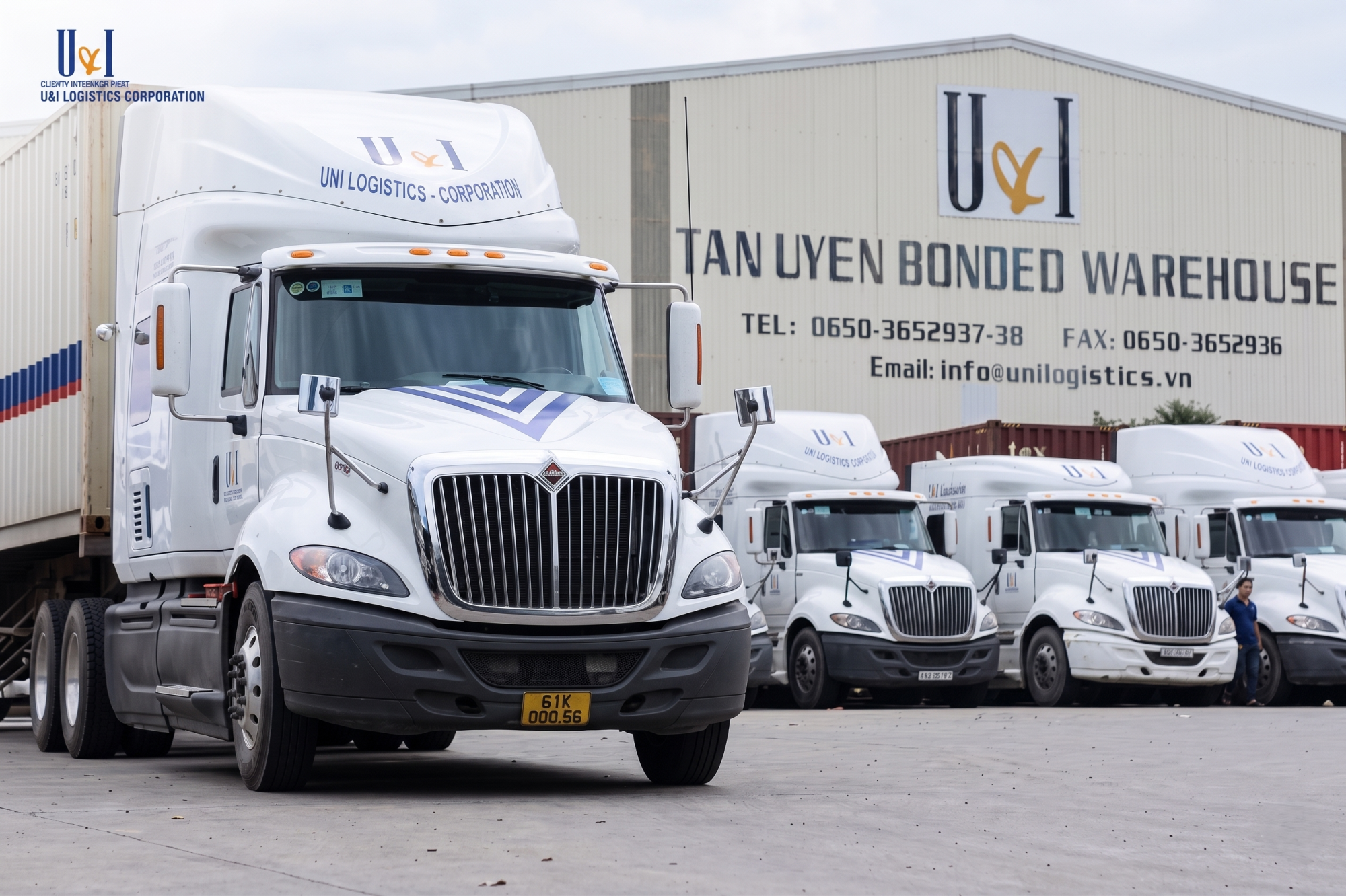
The U&I Logistics operating model offers a clear illustration of a systematic approach. By maintaining fixed schedules on key transport corridors within a strategic network, U&I Logistics can distribute the fuel variable across a sufficiently large volume of cargo to spread costs evenly. This is precisely the self-defense mechanism through operational stability — helping to reduce the sensitivity of fuel costs to short-term waves in the energy market. When volume is sufficiently consolidated and schedules are fixed, fuel costs allocated per unit of cargo are not only lower but — more importantly — predictable. Businesses are no longer caught off guard by sudden surcharges; instead, they can incorporate logistics costs into their financial models as a controlled variable.
Selecting a logistics service provider based solely on the lowest unit price at a given moment is a localized strategy and often leads to a significant increase in total long-term costs. The reason lies in the fact that contracts signed at rock-bottom prices rarely have any room to absorb input fluctuations. When oil prices exceed the agreed buffer threshold, the carrier is forced to find ways to bail itself out: cutting service quality, consolidating trips to reduce fixed costs, or unilaterally adjusting surcharges to offset losses. The next consequence is a vicious cycle of hidden costs: the business must continuously search for replacement providers, renegotiate contracts, and handle incidents caused by unstable service — all of which generate enormous administrative and opportunity costs, figures that almost never appear in the initial unit-price comparison reports.
A properly oriented outsourced logistics strategy needs to focus on core capability criteria: forecasting ability across multiple oil price scenarios, network coverage on key corridors, and a surcharge structure calculated based on the actual fuel consumption metrics of the fleet — rather than a figure imposed by the prevailing market average. This approach has two simultaneous effects: it prevents the logistics provider from "riding the wave" to profit from fuel price volatility, while at the same time creating an incentive that compels them to invest in modern, fuel-efficient fleets to maintain competitiveness. In other words, a properly designed contract transforms the logistics provider from the position of a transactional partner into that of a partner in a symbiotic logistics ecosystem.


26/04/2026
The focus needs to shift from listed freight indices to the actual capability of preserving vessel slots and container units

26/04/2026
A 2026 McKinsey report shows that AI has automated 60% of status updates, 73% of order confirmations, and 80% of invoice processing in logistics—yet three core capabilities that AI cannot replace are physical infrastructure, on-site contingency management, and the legal liability of licensed customs brokers.
26/04/2026
When the Drewry WCI reversed course with a 3% rise in early May 2026 and shipping lines simultaneously imposed PSS and GRI, the "sale hunting" tactic through spot rates is revealing structural risks — and the real equation lies in the capability to manage the forwarder vendor portfolio


